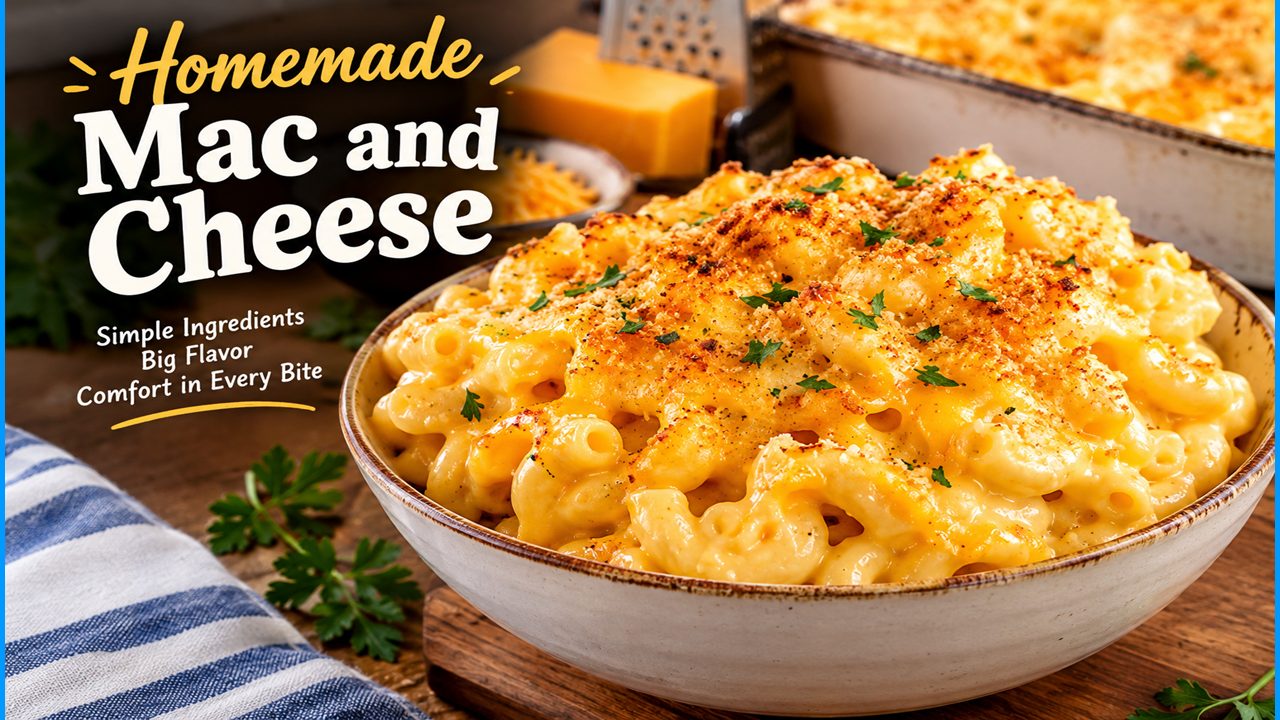
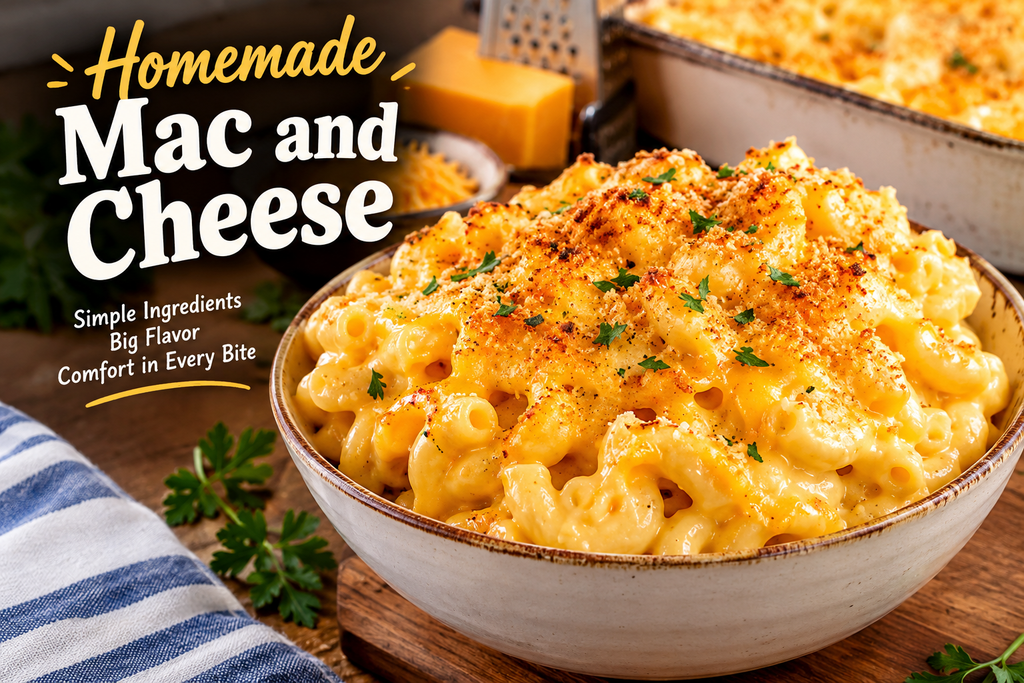
Homemade Mac and Cheese: The Ultimate Comfort Food Guide
The Comfort and Joy of Homemade Mac and Cheese
Homemade Mac and Cheese is one of those dishes that can instantly make a meal feel special. It is warm, creamy, satisfying, inexpensive, and remarkably versatile. Although boxed macaroni and cheese has been a convenient favorite for generations, making mac and cheese from scratch offers something completely different. You control the pasta, cheese, seasoning, texture, and toppings, allowing you to create a dish that tastes fresh and personal.
At its simplest, mac and cheese combines cooked macaroni with a creamy cheese sauce. But behind this apparently simple combination are several techniques that can transform an ordinary bowl of pasta into an impressive comfort-food experience. A smooth cheese sauce, properly cooked pasta, balanced seasoning, and carefully selected cheese can make an enormous difference.
The beauty of homemade mac and cheese is that there is no single correct version. Some people prefer a silky stovetop sauce that coats every piece of pasta. Others love baked mac and cheese with a golden, crunchy crust. Some prefer sharp cheddar and mustard for a bold flavor, while others enjoy combinations involving mozzarella, Monterey Jack, Gouda, Parmesan, or other cheeses.
This book explores all of these possibilities.
You will learn how to select pasta, prepare a reliable cheese sauce, choose cheese combinations, avoid common problems, create baked and stovetop versions, add vegetables and proteins, develop spicy variations, and prepare lighter alternatives. The goal is not simply to provide recipes but to help you understand why the recipes work.
A good mac and cheese begins with good ingredients, but technique matters just as much. Pasta that is overcooked can become mushy. Cheese added at excessive heat can become oily or grainy. Too much liquid can make the dish runny, while too little can produce a thick and heavy sauce.
Fortunately, these problems are easy to understand and prevent.
Homemade mac and cheese is also an excellent recipe for experimenting. Once you understand the basic sauce, you can adapt it to suit different occasions. Add roasted vegetables for a family dinner, chicken for a filling meal, jalapeños for heat, or breadcrumbs for a crunchy topping. You can even prepare it ahead of time and bake it when needed.
Whether you are cooking for children, preparing a weekend family meal, hosting friends, or simply craving something comforting after a long day, mac and cheese can become one of the most useful recipes in your kitchen.
This book takes you from the fundamentals to creative variations. By the end, you should be comfortable preparing homemade mac and cheese without depending entirely on a packaged mix or a rigid recipe.
The most important lesson is simple: great mac and cheese comes from balancing pasta, sauce, cheese, seasoning, and texture.
Let’s begin.
The Story and Appeal of Homemade Mac and Cheese
Mac and cheese has become one of the world’s best-known comfort foods. Its appeal is easy to understand. Pasta provides a satisfying base, while melted cheese contributes richness, saltiness, creaminess, and an irresistible aroma.
The dish is also wonderfully adaptable. It can be served as a simple side dish or transformed into a complete meal.
One reason homemade mac and cheese remains popular is accessibility. The basic ingredients are common pantry and refrigerator staples: pasta, milk, butter, flour, and cheese. You do not need specialized equipment or advanced culinary skills.
The first important distinction is between stovetop mac and cheese and baked mac and cheese.
Stovetop mac and cheese is generally prepared by cooking pasta and combining it with a cheese sauce. It is usually creamy and soft, with a smooth sauce surrounding the pasta.
Baked mac and cheese begins similarly but is transferred to an oven-safe dish and baked. Depending on the recipe, the finished dish may have a firm top, browned cheese, breadcrumbs, or other toppings.
Neither method is inherently better. They simply produce different experiences.
Why Homemade Mac and Cheese Tastes Different
Packaged mac and cheese often relies on powdered cheese or processed sauce ingredients. Homemade versions allow you to use real cheese and adjust the flavor.
You can choose mild cheddar for children, sharp cheddar for a stronger flavor, or combine several cheeses.
You can also control the salt. This is particularly useful because different cheeses have different levels of saltiness.
Another advantage is texture. Homemade cheese sauce can be adjusted to be very creamy or relatively thick.
The Emotional Side of Comfort Food of Homemade Mac and Cheese
Food is not simply about nutrition. Certain dishes become connected with family meals, holidays, childhood memories, and relaxing evenings.
Mac and cheese has many characteristics associated with comfort food:
- It is warm.
- It is creamy.
- It is filling.
- It has a familiar flavor.
- It can be prepared for groups.
- It can be customized.
- It works as both a main dish and side.
These qualities make it particularly useful for family cooking.
Making Mac and Cheese Your Own Homemade Mac and Cheese
A basic recipe is only a starting point.
You can create a smoky version with smoked cheese or paprika. You can introduce vegetables such as broccoli, spinach, peas, or roasted cauliflower. Chicken can make the dish more substantial. Jalapeños or chili flakes can provide heat.
Even the topping can change the character of the dish.
Breadcrumbs create crunch. Parmesan provides additional savory flavor. Crushed crackers can create a rustic topping. A mixture of breadcrumbs and melted butter can produce an especially attractive golden crust.
The important principle is balance. Adding ingredients simply because they sound interesting does not necessarily create a better dish. Each addition should complement the creamy cheese sauce and pasta.
The Basic Formula of Homemade Mac and Cheese
A useful way to understand homemade mac and cheese is to think of it as five components:
Pasta + Sauce + Cheese + Seasoning + Texture
The pasta provides structure.
The sauce provides moisture and creaminess.
The cheese creates the characteristic flavor.
Seasoning adds complexity.
Texture comes from the pasta itself and optional toppings.
Once you understand these components, recipes become much easier to adapt.
Essential Ingredients for Perfect Mac and Cheese
The quality of your mac and cheese depends heavily on ingredient selection. Fortunately, you do not need expensive ingredients.
Pasta
Traditional macaroni is an obvious choice, but many short pasta shapes work well.
Good options include:
- Elbow macaroni
- Shells
- Cavatappi
- Rotini
- Penne
- Small bow-tie pasta
Shapes with curves, ridges, and cavities are particularly useful because they hold cheese sauce.
Butter
Butter contributes richness and is commonly used to create the base of the cheese sauce.
Unsalted butter provides greater control over seasoning, while salted butter can also be used if you adjust the added salt.
Flour
All-purpose flour is often combined with butter to create a roux.
A roux helps thicken the milk before cheese is added.
The basic process is simple:
- Melt butter.
- Add flour.
- Stir.
- Cook briefly.
- Gradually add milk.
This creates the foundation of a classic creamy cheese sauce.
Milk
Whole milk creates a rich sauce, but other varieties can work.
You can use:
- Whole milk
- Reduced-fat milk
- Evaporated milk
- Unsweetened plant-based milk
The choice affects richness and texture.
Cheese
Cheese is the star ingredient.
Cheddar is one of the most popular choices because it melts well and has a recognizable flavor.
However, blending cheeses can produce a more complex result.
Possible combinations include:
Cheddar + Monterey Jack
Smooth, creamy, and mild.
Cheddar + Gouda
Rich with a slightly sweet character.
Cheddar + Parmesan
Strong and savory.
Cheddar + Mozzarella
Stretchy and mild.
Cheddar + Gruyère
Rich and sophisticated.
Freshly grated cheese generally melts more smoothly than many pre-shredded varieties because packaged shredded cheese can contain anti-caking ingredients.
Seasonings
Basic seasoning may include:
- Salt
- Black pepper
- Garlic powder
- Onion powder
- Paprika
- Mustard powder
You do not need all of these.
Seasoning should support the cheese rather than overwhelm it.
Optional Ingredients for Homemade Mac and Cheese
Depending on the recipe, you can add:
- Breadcrumbs
- Parmesan
- Jalapeños
- Bacon
- Chicken
- Broccoli
- Spinach
- Peas
- Roasted vegetables
- Hot sauce
- Fresh herbs
The key is moderation.
A heavily loaded mac and cheese can become more like a casserole than a traditional cheese pasta.
Choosing the Best Pasta
Pasta is more important than many people realize.
The wrong pasta can make a good cheese sauce feel disappointing.
Why Shape Matters
Cheese sauce needs something to cling to.
Elbow macaroni is popular because its curved shape holds sauce.
Shell pasta is excellent because sauce collects inside the shell.
Cavatappi is particularly effective because its spiral shape provides plenty of surface area.
Cooking Pasta Correctly
One of the most important rules is:
Do not overcook the pasta.
If pasta will be baked after being mixed with sauce, it should generally be slightly firmer than pasta that will be eaten immediately.
This is because the pasta continues cooking during baking.
Overcooked pasta can become soft and fall apart.
Salting the Water
Pasta water should be seasoned so that the pasta itself has flavor.
Add salt to boiling water before adding the pasta.
The exact amount depends on personal preference and the saltiness of the cheese sauce.
Do You Need to Rinse Pasta?
For hot mac and cheese, rinsing cooked pasta is usually unnecessary.
Rinsing removes surface starch that can help the sauce cling to the pasta.
Instead, drain the pasta and combine it with the sauce promptly.
Pasta and Sauce Ratio
Too much pasta can produce dry mac and cheese.
Too much sauce can make it soupy.
A good recipe balances the two.
When preparing baked mac and cheese, remember that the oven will remove some moisture. Therefore, the mixture can appear slightly creamier before baking than the final desired consistency.
Alternative Pasta Shapes
Do not be afraid to experiment.
Small shells create pockets of cheese sauce.
Cavatappi creates an attractive presentation.
Rotini provides a textured surface.
Penne creates a more substantial bite.
The best choice is ultimately the pasta shape you enjoy eating.
Understanding Cheese and Cheese Blends
Cheese determines much of the personality of mac and cheese.
Different cheeses melt differently, taste differently, and contribute different textures.
Cheddar
Cheddar is perhaps the most recognizable choice.
Mild cheddar provides a gentle flavor.
Sharp cheddar creates a stronger cheese presence.
Extra-sharp cheddar can be particularly flavorful but may need to be balanced with a milder melting cheese.
Mozzarella
Mozzarella is known for its excellent melting ability and stretchy texture.
However, mozzarella alone can produce a relatively mild sauce.
Combining it with cheddar creates both stretch and flavor.
Monterey Jack
Monterey Jack melts smoothly and has a mild flavor.
It works particularly well in creamy recipes.
Gouda
Gouda can add richness and a slightly sweet flavor.
Smoked Gouda can create a smoky version of mac and cheese.
Parmesan
Parmesan has a strong savory flavor.
It is often better used as part of a blend rather than as the primary cheese.
Gruyère
Gruyère melts beautifully and provides a rich, complex flavor.
It can make a simple mac and cheese taste more sophisticated.
Why Blend Cheeses?
A cheese blend allows you to combine desirable characteristics.
For example:
Cheddar: flavor
Mozzarella: stretch
Monterey Jack: smoothness
Parmesan: savory depth
This is why cheese blends can produce more interesting results than relying on one cheese.
Avoiding Grainy Cheese Sauce
One of the biggest problems beginners encounter is a grainy or oily sauce.
Excessive heat is a common cause.
Cheese should not be aggressively boiled.
Once the thickened milk base is ready, reduce the heat before incorporating cheese.
Add cheese gradually and stir until melted.
This gentle approach helps maintain a smoother texture.
How to Make a Creamy Cheese Sauce
The cheese sauce is the heart of homemade mac and cheese.
A classic sauce begins with a roux.
Step 1: Melt the Butter
Place butter in a saucepan over medium heat.
Allow it to melt without burning.
Step 2: Add Flour
Add an approximately equal amount of flour and whisk.
The mixture will become thick.
Cook briefly while stirring.
This removes the raw flour taste.
Step 3: Add Milk Gradually
Slowly add milk while whisking continuously.
Adding the milk gradually helps prevent lumps.
Continue stirring as the mixture heats.
Step 4: Allow the Sauce to Thicken
The mixture should become creamy and coat the back of a spoon.
Avoid extremely high heat.
A gentle cooking temperature is easier to control.
Step 5: Add Cheese
Lower the heat.
Add grated cheese gradually.
Stir after each addition.
Continue until the cheese melts.
Step 6: Season
Add salt, pepper, and any additional seasonings.
Taste carefully.
Remember that cheese contributes salt.
Sauce Consistency
The sauce should be creamy but not excessively thick.
If it is too thick, add a small amount of milk.
If it is too thin, continue heating gently or use a slightly thicker roux next time.
A useful test is to lift a spoon from the sauce.
The sauce should cling to the spoon without appearing like a solid paste.
Classic Stovetop Homemade Mac and Cheese
Stovetop mac and cheese is one of the fastest versions to prepare.
It is ideal for weeknight dinners because it does not require an oven.
Ingredients
For approximately four servings:
- 250 g elbow macaroni
- 2 tablespoons butter
- 2 tablespoons all-purpose flour
- 2 cups milk
- 2 cups grated cheddar
- Salt
- Black pepper
- ½ teaspoon mustard powder
- ½ teaspoon garlic powder
Method
Cook the macaroni according to the package directions until just tender.
Drain it without rinsing.
Prepare the sauce by melting butter in a saucepan.
Add flour and whisk.
Gradually add milk while whisking.
Cook until thickened.
Reduce the heat.
Add cheddar gradually.
Stir until completely melted.
Add mustard powder, garlic powder, salt, and black pepper.
Add the cooked pasta.
Stir gently until every piece is coated.
Taste and adjust seasoning.
Serving
Stovetop mac and cheese is best served immediately.
As it cools, the sauce naturally becomes thicker.
If it becomes too thick, a small splash of warm milk can restore creaminess.
Making It More Flavorful of Homemade Mac and Cheese
A little mustard can enhance the cheese flavor without making the dish taste strongly of mustard.
Paprika can provide warmth.
Freshly ground black pepper can add contrast.
A small amount of Parmesan can increase savory depth.
The goal is not to make the seasoning obvious. The goal is to make the cheese taste more complete.
Oven-Baked Mac and Cheese
Baked mac and cheese offers something stovetop versions cannot: a golden, textured crust.
Preparing the Pasta
Cook pasta slightly less than fully tender.
This prevents it from becoming mushy during baking.
Preparing the Sauce
Make a slightly loose cheese sauce.
The pasta will absorb some moisture in the oven.
Combining
Mix pasta and sauce thoroughly.
Transfer the mixture to a greased baking dish.
Adding the Topping
A simple topping can consist of:
- Breadcrumbs
- Melted butter
- Parmesan
Mix the ingredients and sprinkle evenly over the pasta.
Baking
Bake until the center is hot and the top is golden.
Avoid excessive baking.
The goal is a creamy interior with a browned surface.
Resting
Allow the dish to rest briefly before serving.
This gives the sauce time to settle.
Creating a Better Crust
For extra crunch, combine breadcrumbs with Parmesan and melted butter.
You can also add a little paprika or dried herbs.
The topping should remain relatively light so it does not overpower the creamy pasta beneath it.
Extra-Creamy Mac and Cheese
Some people prefer mac and cheese that is exceptionally creamy.
The secret is managing moisture and cheese carefully.
Use Enough Sauce
Creaminess begins with sauce.
If the pasta looks barely coated before baking, the finished dish may become dry.
Choose Good Melting Cheese
Cheddar, Monterey Jack, Gouda, and similar cheeses can work well.
A combination is often preferable.
Add Dairy Carefully
Cream cheese can add body and tang.
Evaporated milk can also contribute richness.
However, too many rich ingredients can make the dish excessively heavy.
Avoid Overbaking
Even a perfect cheese sauce can become dry if baked for too long.
Bake only until the dish is hot and the top has reached the desired color.
Reheating Creamy Mac and Cheese
Reheated pasta often becomes thicker.
Add a small amount of milk before reheating.
Warm gently.
Stir occasionally.
Avoid overheating.
This helps restore some of the original creamy texture.
Crispy Toppings and Flavorful Additions for Homemade Mac and Cheese
Texture is one of the easiest ways to make mac and cheese more interesting.
A creamy interior paired with a crunchy topping creates contrast.
Breadcrumb Topping
Mix breadcrumbs with melted butter.
Sprinkle over the mac and cheese before baking.
The breadcrumbs become crisp and golden.
Parmesan Topping
Parmesan adds savory flavor and browns nicely.
It can be combined with breadcrumbs.
Cracker Topping
Crushed crackers create a rustic topping.
This is especially useful when you want something different from traditional breadcrumbs.
Herbs
Parsley, chives, thyme, or other herbs can provide freshness.
Add delicate fresh herbs after cooking or use them sparingly before baking.
Vegetables
Broccoli is particularly compatible with cheese sauce.
Other possibilities include:
- Peas
- Spinach
- Roasted cauliflower
- Sweet corn
- Bell peppers
Cook vegetables before adding them if necessary.
Spices
Paprika adds warmth.
Black pepper provides sharpness.
Chili flakes introduce heat.
Garlic powder adds savory depth.
The trick is to add enough to create character without covering the cheese flavor.
Chicken, Bacon, and Vegetable forHomemade Mac and Cheese
Mac and cheese can easily become a complete meal by adding protein or vegetables.
Chicken Mac and Cheese
Cooked chicken can be cut into small pieces and folded into the finished pasta.
Roasted or grilled chicken works particularly well.
Season the chicken before cooking so it contributes flavor.
Bacon Mac and Cheese
Cook bacon until crisp.
Drain excess fat.
Crumble the bacon and add it to the pasta.
Because bacon is salty, taste the cheese sauce before adding additional salt.
Broccoli Mac and Cheese
Cook broccoli until tender but still slightly firm.
Add it to the pasta before baking.
The vegetable adds color, texture, and freshness.
Spinach
Fresh spinach can be wilted before adding.
Frozen spinach should be thawed and squeezed dry to prevent excess water.
Combining Ingredients of Homemade Mac and Cheese
Do not overload the dish.
Choose one or two major additions.
For example:
Chicken + broccoli
or
Bacon + jalapeño
or
Spinach + Parmesan
This keeps the dish balanced.
Spicy and International Mac and Cheese Variations
The basic cheese sauce provides an excellent foundation for global-inspired flavors.
Spicy Jalapeño Mac and Cheese
Add chopped jalapeños to the sauce or pasta.
For additional heat, add chili flakes or hot sauce.
Use a mild cheese such as Monterey Jack alongside cheddar to balance the heat.
Mexican-Inspired Version of Homemade Mac and Cheese
Consider adding:
- Jalapeño
- Corn
- Black beans
- Chili powder
- Cumin
- Cheddar
- Monterey Jack
These ingredients create a bold, colorful dish.
Garlic and Herb Version
Add roasted garlic and fresh herbs.
The sweetness of roasted garlic works especially well with cheese.
Smoky Mac and Cheese
Smoked paprika or smoked Gouda can provide a smoky character.
Use moderate amounts because smoke can quickly dominate the dish.
Indian-Inspired Mac and Cheese
For a distinctly different variation, consider adding small amounts of:
- Garam masala
- Turmeric
- Chili
- Cumin
- Coriander
These spices should be used carefully.
The objective is to complement the cheese rather than turn the sauce into a completely different curry.
Mediterranean-Inspired Version
Try:
- Spinach
- Roasted red pepper
- Garlic
- Feta in moderation
- Herbs
Because feta does not melt like cheddar, it works better as an accent.
Healthy and Lighter Mac and Cheese
Mac and cheese is traditionally rich, but it can be adapted.
The goal of a lighter recipe is not necessarily to remove every calorie. Instead, focus on portion balance, vegetables, and reasonable ingredient quantities.
Add Vegetables
Broccoli, cauliflower, peas, spinach, and carrots can increase the nutritional variety of the meal.
Use Strong-Flavored Cheese
A small amount of strongly flavored cheese can contribute plenty of flavor.
Sharp cheddar or Parmesan can help create a satisfying taste without requiring a large quantity.
Choose Whole-Grain Pasta
Whole-grain pasta can provide more fiber than traditional refined pasta.
Its flavor is somewhat stronger, so pair it with a flavorful sauce.
Reduce Heavy Ingredients
You can use reduced-fat milk rather than cream.
However, removing too much fat can make cheese sauce less satisfying and affect texture.
Portion Size
Mac and cheese can be enjoyed as part of a balanced meal.
Serve a moderate portion alongside vegetables or a salad.
Lighter Doesn’t Mean Bland
Use herbs and spices to create flavor.
Garlic, black pepper, paprika, mustard, chili, and herbs can all add personality without requiring large amounts of fat.
Common Mistakes and How to Fix Them
Even experienced cooks occasionally encounter problems.
Problem: Grainy Cheese Sauce
Possible cause: Excessive heat.
Solution: Lower the heat when adding cheese and stir gently.
Problem: Oily Sauce
Possible cause: Cheese has separated.
Solution: Avoid boiling the cheese sauce. Use gentle heat and suitable melting cheeses.
Problem: Dry Mac and Cheese
Possible causes:
- Too little sauce
- Too much pasta
- Overbaking
Solution: Use a slightly looser sauce and avoid excessive baking.
Problem: Watery Mac and Cheese
Possible causes:
- Too much milk
- Wet vegetables
- Undercooked sauce
Solution: Make sure the sauce thickens properly before combining it with pasta.
Drain vegetables thoroughly.
Problem: Bland Flavor
Possible causes:
- Insufficient seasoning
- Mild cheese
- Too much pasta relative to sauce
Solution: Taste before serving.
Add salt carefully, followed by pepper, mustard, paprika, or other seasonings as appropriate.
Problem: Mushy Pasta
Cause: Overcooking.
Solution: Cook pasta only until tender and slightly firm, especially when baking.
Problem: Cheese Does Not Melt Smoothly
Some cheeses naturally melt poorly.
Use a combination of good melting cheeses and avoid excessively high heat.
Serving, Storing, Reheating, and Meal Prep
Mac and cheese is excellent for meal preparation.
Serving
Serve hot.
For a complete meal, pair it with:
- Green salad
- Roasted vegetables
- Steamed broccoli
- Grilled chicken
- Fresh fruit
Storing
Allow leftovers to cool appropriately before refrigerating.
Store them in an airtight container.
Reheating on the Stovetop
Place the mac and cheese in a saucepan.
Add a small splash of milk.
Heat gently.
Stir frequently.
This is one of the best methods for restoring creaminess.
Microwave Reheating
Use a microwave-safe container.
Heat in short intervals.
Stir between intervals.
Add a little milk if necessary.
Avoid overheating because cheese sauces can separate.
Freezing
Mac and cheese can be frozen, although texture may change after thawing.
Creamier recipes generally handle freezing better than very delicate cheese sauces.
If preparing specifically for freezing, cool the dish appropriately, package it well, and reheat gently.
Meal Prep
One practical approach is to prepare the cheese sauce and pasta separately.
When needed, combine them and finish cooking.
For baked versions, assemble the casserole ahead of time and refrigerate it before baking, allowing appropriate additional baking time if it is cold.
The Ultimate Homemade Mac and Cheese Recipe Collection
The following recipes bring together the techniques discussed throughout this book.
Classic Creamy Mac and Cheese
Ingredients
- 250 g elbow macaroni
- 2 tablespoons butter
- 2 tablespoons flour
- 2 cups milk
- 2 cups sharp cheddar
- ½ teaspoon mustard powder
- ½ teaspoon garlic powder
- Salt
- Black pepper
Instructions
Cook the pasta until slightly firm.
Drain.
Melt butter.
Whisk in flour.
Gradually add milk.
Cook until thickened.
Reduce heat.
Add cheese.
Season.
Add pasta.
Stir until coated.
Serve immediately.
Golden Baked Mac and Cheese
Ingredients
- 250 g macaroni
- 2 tablespoons butter
- 2 tablespoons flour
- 2 cups milk
- 1½ cups cheddar
- ½ cup mozzarella
- ½ cup breadcrumbs
- 2 tablespoons melted butter
- Salt
- Pepper
Instructions
Cook pasta slightly underdone.
Prepare the cheese sauce.
Combine pasta and sauce.
Transfer to a baking dish.
Mix breadcrumbs with melted butter.
Sprinkle over the top.
Bake until bubbling and golden.
Rest briefly before serving.
Chicken Mac and Cheese
Prepare the classic recipe and add approximately one cup of cooked diced chicken.
For extra flavor, season the chicken with black pepper, garlic, paprika, and a small amount of salt before cooking.
Fold the chicken into the finished mac and cheese.
Broccoli Mac and Cheese
Prepare the classic cheese sauce.
Cook broccoli until tender.
Add the broccoli and pasta to the sauce.
For a baked version, transfer everything to a casserole dish and top with breadcrumbs.
Spicy Mac and Cheese
Add:
- 1–2 chopped jalapeños
- ½ teaspoon chili flakes
- ½ teaspoon paprika
- A small amount of hot sauce
Adjust the heat according to preference.
Four-Cheese Mac and Cheese
Try a combination of:
- Cheddar
- Monterey Jack
- Mozzarella
- Parmesan
The cheddar contributes the primary cheese flavor, Monterey Jack and mozzarella improve melting and texture, while Parmesan adds savory depth.
Final Thoughts of Homemade Mac and Cheese
Homemade mac and cheese is much more than pasta covered in melted cheese. It is a flexible cooking formula that can be adapted to different tastes, occasions, and ingredients.
Once you understand the fundamentals, you can confidently create your own versions.
Remember the essential principles:
- Choose pasta that holds sauce well.
- Avoid overcooking the pasta.
- Build a smooth sauce.
- Use cheeses that melt appropriately.
- Add cheese over moderate heat.
- Season gradually.
- Avoid excessive baking.
- Balance creamy and crunchy textures.
- Experiment with vegetables and proteins.
- Taste before serving.
The best homemade mac and cheese does not require complicated techniques or expensive ingredients. It requires attention to texture, temperature, seasoning, and balance.
Start with the classic recipe, learn how the sauce behaves, and then begin experimenting. Soon, you will be able to create a signature mac and cheese recipe that suits your own kitchen and family.
And that is the real beauty of homemade cooking: a simple recipe becomes your recipe.
Homemade Mac and Cheese